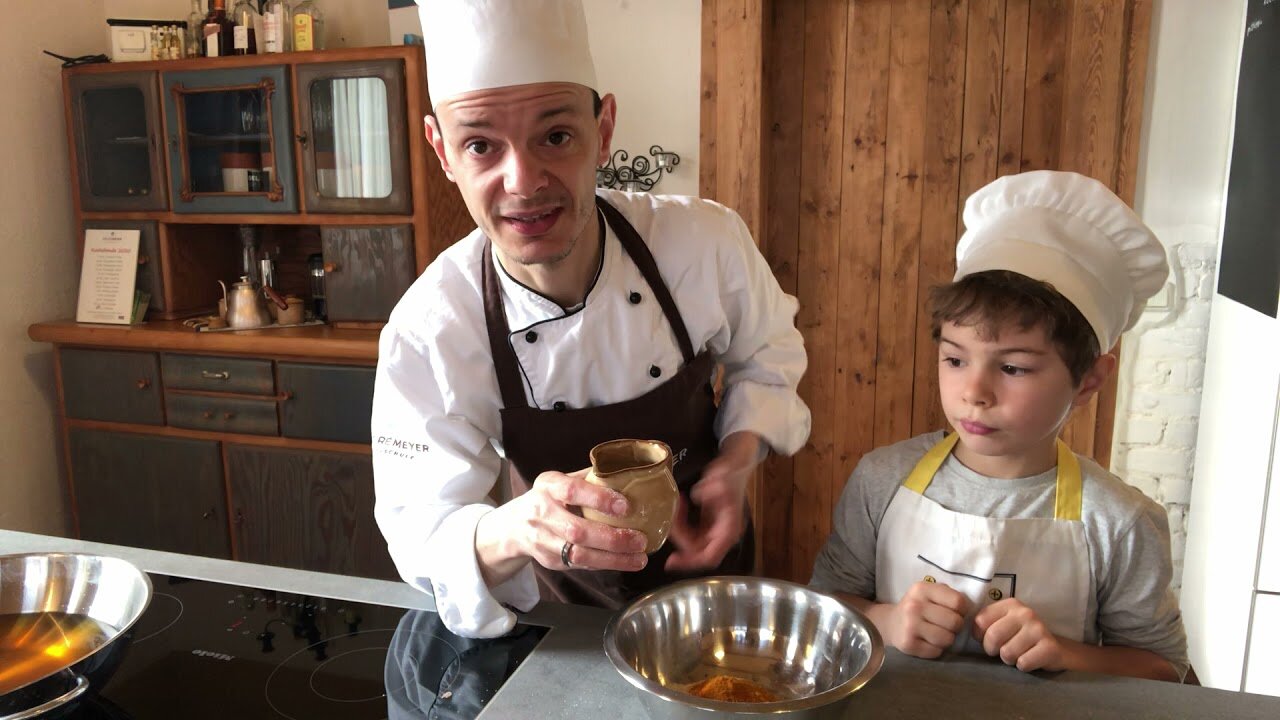


On the picturesque Beckenberg near Eibau, culinary arts are being reimagined. André Meyer, head chef and owner of the organic mountain inn Beckenbergbaude, combines traditional Upper Lusatian recipes with modern ideas. Regional ingredients, organically grown foods, and artisanal cooking play a central role in his approach. In this interview, he explains how simple ingredients can be transformed into extraordinary culinary experiences and why the culinary identity of Upper Lusatia is so close to his heart.
Mr. Meyer, what sparked your passion for food?
My passion for food began in my childhood. My mother always says that I started cooking on a small toy stove when I was three years old—using water and a bouillon cube as ingredients. Later, I was able to complete an apprenticeship as a chef in the Zittau Mountains. There I learned that a good soup should contain bones and roasted vegetables instead of a bouillon cube. My enthusiasm for good cooking has been with me ever since.
What was your career path like leading up to the Beckenbergbaude?
After completing my apprenticeship, I first worked at the restaurant where I’d trained and later moved on to other dining establishments. I’ve always remained loyal to the Zittau Mountains. At the same time, I completed my training as an instructor, because it was important to me to pass on my knowledge. When I heard that the Beckenbergbaude was looking for a tenant, I applied—at the age of 21 and with my parents’ support. That’s how I was able to make my dream come true. I’ve been working here for many years now.
What do food and enjoyment mean to you personally?
For me, food is a passion—both in cooking and in savoring it. I appreciate dishes where the ingredients can really let their own flavors shine. For me, the best compliment is when guests say, “That tasted great!” That immediate feedback is what makes this profession so special.
What makes Upper Lusatia special to you as a culinary region?
Upper Lusatia is incredibly diverse when it comes tocuisine. The Zittau area has Bohemian influences, Görlitz has Silesian ones, and the Bautzen region has Sorbian ones. I’m particularly fascinated by old recipes like Präglsaalz or Stupperle, which have almost fallen into oblivion in many places. Reviving these Upper Lusatian culinary traditions is a labor of love for me.
Is there a typical dish or regional product that you associate particularly with Upper Lusatia?
If I had to name one, it would be Teichelmauke. It’s a wonderful example of how simple ingredients can be transformed into a special dish. Many traditional recipes are hardly known today. Thanks to my grandmother’s old notes, I was able to rediscover some of them. To me, they’re a true treasure of Upper Lusatian cuisine.
How do you manage to integrate traditional elements into your modern cuisine?
I enjoy reinterpreting traditional dishes. For example, in the summer I serve Stupperle with ratatouille vegetables and a bit of hard cheese—similar to gnocchi in Italian cuisine. This results in contemporary dishes that stay true to their roots while offering new flavor experiences.
What inspires you to create new dishes?
I find inspiration everywhere—in cookbooks, while traveling, or simply in everyday life. Sometimes an idea comes to me completely spontaneously. It’s always exciting to see how our guests react to them. Some dishes quickly become favorites, while others remain exciting experiments.
Do you have a personal favorite dish?
Jack-in-the-ground potatoes with quark—simple, but for me, it’s real comfort food. Whether with flaxseed oil or a good liver sausage, this dish gives me energy and helps me unwind. Once a week, it’s simply a must.
What role do regional ingredients and organic foods play in your kitchen?
A very big one. It’s important to me to know where our ingredients come from and how they were produced. We want to highlight the diversity of our region—for example, with fish from Lusatia or traditional products from Upper Lusatia. Since 2023, we’ve been working exclusively with organic products. For me, treating animals responsibly is just as much a part of good cuisine as high-quality ingredients and artisanal preparation.
The idea of turning the Beckenbergbaude into an organic mountain inn—was that your goal from the start, or did it evolve over time?
When I started in 2001, the topic of organic food didn’t yet play a central role for me. But even back then, it was important to me to be mindful about food and, for example, not to serve fish from overfished stocks. In 2013, we became certified organic and initially worked with a mix of conventional and organic products. Step by step, we’ve increased the proportion of organic products—partly because our guests have supported this transition positively. Since 2023, we’ve been using exclusively organic products. Of course, there are also critical voices, but many guests appreciate this approach and support our philosophy.
What are your hopes for the culinary future of Upper Lusatia?
I hope that the people of Upper Lusatia will promote the value of our region even more widely. There is so much to be proud of—culinarily, culturally, and in terms of our landscape. My hope is that we confidently showcase and continue to develop this diversity. Criticism is part of the process, but it’s just as important to highlight the many positive aspects of our region.